Leadership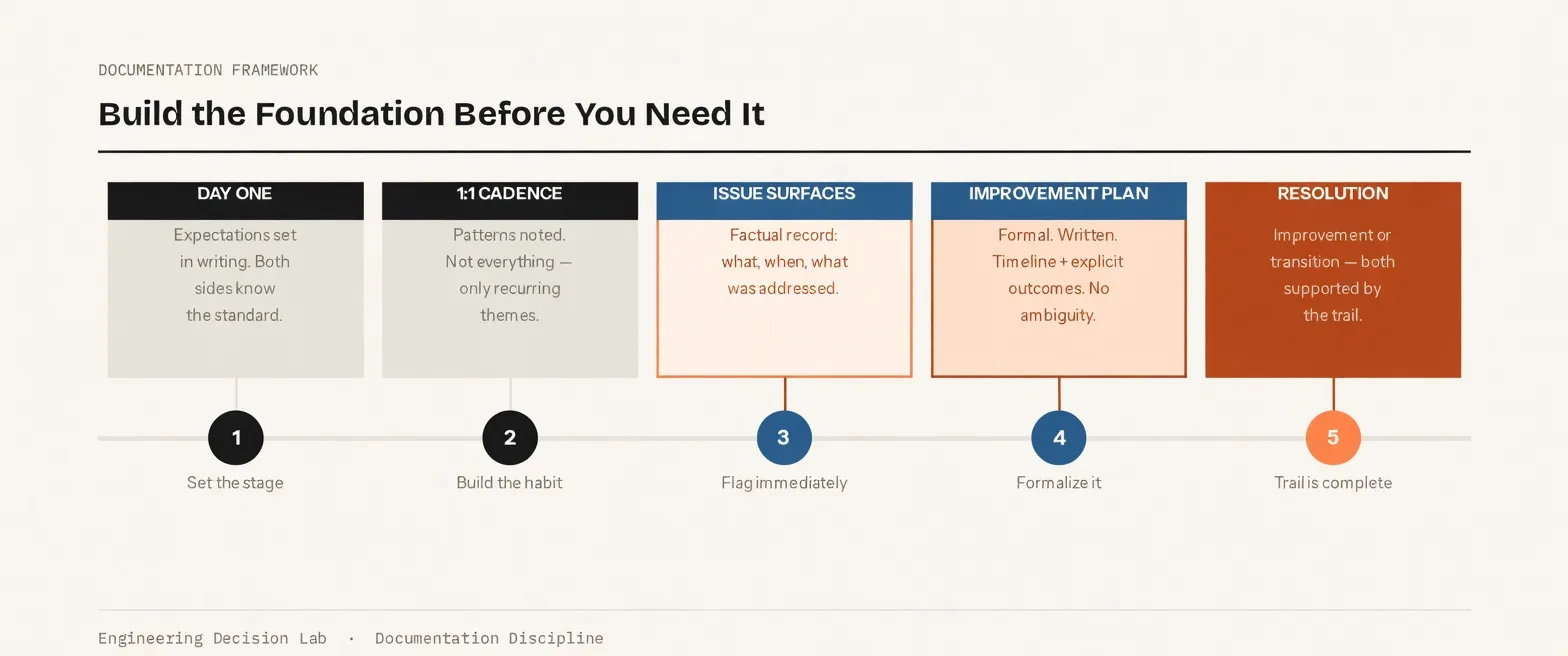
Leadership
The Documentation Discipline Every Engineering Leader Needs
Performance documentation isn't bureaucracy — it's protection. For the individual, the team, and the organization. Built early and consistently, it transforms difficult management decisions from high-risk conversations into clear, defensible processes. The absence of it can paralyze even the most decisive leader at exactly the wrong moment.
2–4 min read
Key Takeaways
- Document performance expectations before there's ever a problem
- The moment an issue surfaces, begin a written record — factual, not emotional
- Leads handle day-to-day coaching; managers own the formal documentation
- A well-documented process means no surprises for anyone — including leadership
The Lesson That Cost More Than It Should Have
I had an IC on my team who was struggling on multiple fronts — consistent performance issues, an attitude visibly affecting team morale, disengagement that wasn't responding to coaching. I tried everything. I escalated to my director with a clear picture of the situation and what I believed needed to happen.
But the documentation wasn't there. No formal expectations in writing, no documented feedback trail, no improvement plan with dates and outcomes. My director was reluctant to act — the concern was legal exposure. So we waited. The person eventually left on their own.
In the meantime, I absorbed their project work on top of my management responsibilities. Deadlines slipped. Morale suffered. The decision to wait wasn't made out of incompetence — it was made because the documentation wasn't there to support action. That's fixable. And it starts long before there's ever a problem.
Build the Foundation Before You Need It
The framework I follow now starts on day one.
At hire: Document what success looks like in the role — specifically. What does strong performance mean at 30, 60, 90 days? Both sides know the standard upfront.
In 1:1s: Significant feedback conversations get noted. Not everything needs to be written — but patterns do. If you're having the same conversation repeatedly, that pattern needs to be visible somewhere other than your memory.
When an issue surfaces: Document what you observed, when, what was discussed, and what the expectation is going forward. Keep it factual, not emotional. Observations, not interpretations.
If it escalates: Formalize it. A written improvement plan with specific expectations, a defined timeline, and explicit outcomes. No ambiguity. No surprises.
How Leads Fit Into the Process
Leads are the first line of coaching. They notice patterns before a manager does. They have the first conversations when something isn't tracking. And surfacing concerns early — not absorbing them quietly — is one of their core responsibilities.
But the formal documentation process belongs to the manager.
The escalation flow is clean: Lead notices a pattern → gives direct feedback → if it doesn't improve, brings it to the manager with context → manager owns the formal process and any HR involvement.
This keeps leads focused on coaching and development, while ensuring the accountability process carries the weight and consistency it needs.
No Surprises Is the Standard
Series
People-First Leadership · Part 4
Previous · Part 1
Why I Don't Do Technical Interviews for Senior Engineers
Previous · Part 2
Why I Let People Struggle — And When I Step In
Previous · Part 3
People Are Your Most Valuable Asset — And Most Leaders Don't Actually Believe That
Next · Part 5
Accountable Autonomy: The Leadership Philosophy That Actually Works