Leadership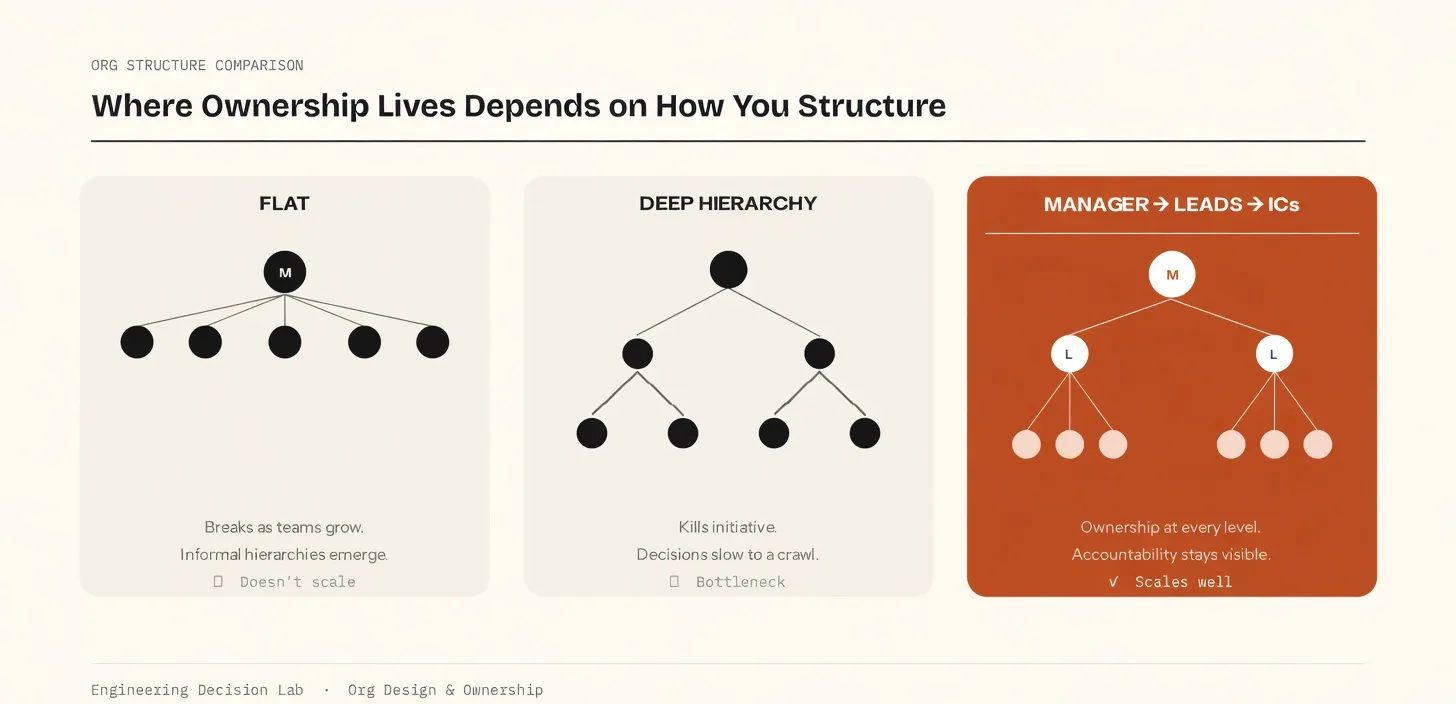
Leadership
Org Design Is Culture: How Structure Creates Ownership
Most engineering leaders think about org design as a reporting structure problem. It isn't — it's a culture problem. The way you arrange your teams, define your leads, and distribute accountability determines whether ownership flows through your organization or stops at the top.
3–5 min read
Key Takeaways
- Org structure is a cultural decision, not just an operational one
- The Manager → Leads → ICs model works because it pushes ownership to the people closest to the work
- Leads carry both delivery and people development — that's what makes them mini-managers
- Team cohesion is built intentionally, not left to chance
- Good org design builds your next layer of leadership as a natural byproduct
Structure Is a Statement
Every org chart is a statement about where you believe decisions should live.
A flat structure with no leads says coordination happens organically — which works at small scale and breaks quickly as teams grow. A deep hierarchy says decisions flow top-down — which creates predictability but kills initiative. Neither scales well in engineering.
What does scale is a structure that deliberately pushes ownership down to the people closest to the work, while keeping accountability visible at every level. The model I return to consistently: Manager → Leads → ICs. Simple, but every layer has a real job.
What Each Layer Actually Owns
The model only works if each layer has a genuinely distinct job — not overlapping roles that create confusion about who owns what.
ICs own their features, their code, their commitments. They're not order-takers — they're contributors who bring judgment to their work, not just execution. The best ICs are engaged in the why of what they're building, not just the what.
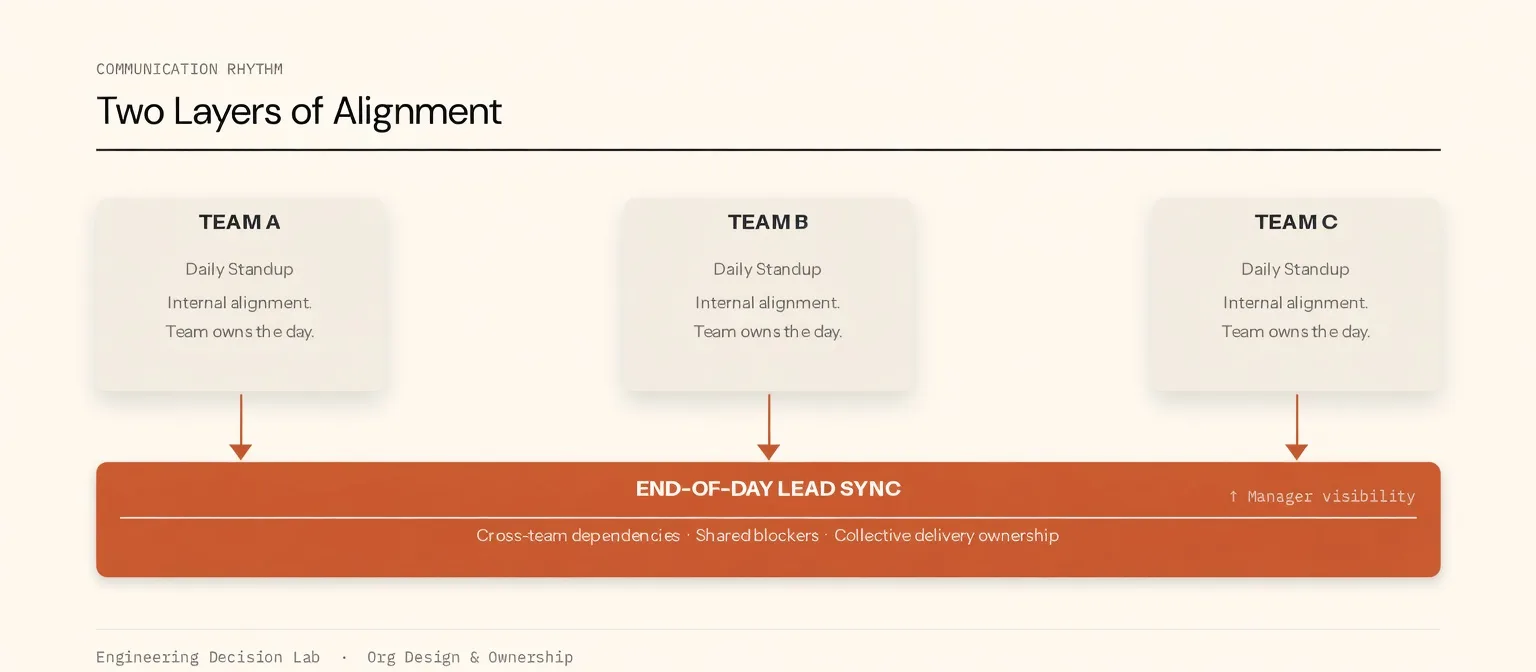
Leads own their team's delivery and their people's development. They run the day-to-day: standups, unblocking ICs, reviewing work, coaching performance, surfacing issues before they escalate. They take roughly 15–25% of sprint velocity as individual contributors — the rest goes to leading.
Managers own the org. They set expectations, remove blockers leads can't clear, make hard calls on resources and priorities, and hold leads accountable for team health.
Each layer owns something real. When ownership is diffuse or unclear, accountability disappears — and the manager ends up carrying everything the structure was designed to prevent.
Leads Are Mini-Managers, Not Senior Developers With Extra Duties
The biggest failure mode I see in lead roles: treating them as senior engineers who also run standups. That's not a lead — that's a senior developer with extra obligations and no real authority.
A lead is a mini-manager. They hold regular 1:1s with their ICs — not as a checkbox, but as a genuine investment in their people's development. They know each IC's strengths, growth areas, current struggles, and career interests. They give direct feedback before problems escalate. They build a team environment where people feel like they belong to something, not just a ticket queue.
This framing has a powerful secondary benefit: it prepares leads for the next level. By the time someone steps into full management, they've been doing a scaled version of the job for months or years. The transition becomes an expansion of scope, not a leap into the unknown.
Series
Scaling Engineering Leadership · Part 2